Tissue paper giant C&S Paper saw little change in revenue during the first half of the year, while profits increased by more than half.
Recently, C&S Paper Co., Ltd. (SZ: 002511) released its financial results for the first half of 2026. The company reported revenue of RMB 4.410 billion, up 1.85% year on year, while net profit attributable to shareholders reached RMB 225 million, representing a significant increase of 50.13%.
These figures are particularly noteworthy against the backdrop of the current household tissue paper market. Hengan International, whose business scale is roughly twice that of C&S Paper, reported year-on-year declines in both revenue and net profit during the same period.
So where did C&S Paper's revenue come from? And how sustainable is the additional profit?
Benefiting from Lower Pulp Costs
Despite only modest revenue growth, C&S Paper achieved a substantial increase in profitability. Roughly speaking, half of the improvement came from favorable industry conditions, while the other half resulted from the company's own operational adjustments.
First, consider the contribution from market conditions.
In its interim report, C&S Paper stated that pulp accounts for 40%–60% of its operating costs. Coincidentally, the first half of this year coincided with a downward cycle in pulp prices.
According to data from China Galaxy Securities, the daily average price of northern bleached softwood kraft pulp in China was RMB 4,742 per tonne on June 25, down 18.99% year on year. In January, the average market price of softwood pulp in Shandong was still above RMB 5,600 per tonne.
For a company that purchases hundreds of thousands of tonnes of pulp each year, a nearly 20% decline in raw-material prices is clearly reflected in its financial results. During the first half of the year, C&S Paper's operating costs fell 1.28% year on year, while its overall gross margin increased by 2.07 percentage points to 34.69%.
The company's explanation was straightforward: “Benefiting from lower raw-material and manufacturing costs, the companys production costs continued to improve.”
Product Mix Also Boosts Profitability
However, lower raw-material prices alone cannot solve every problem. Since all tissue paper manufacturers operate in essentially the same raw-material market, competitors theoretically benefit from the same cost advantages.
C&S Paper's additional profits also reflect improvements in its product mix.
According to its interim report, the company continued to strengthen its omni-channel strategy, improve execution at the retail end, and steadily optimize its product portfolio. Its portfolio of high-margin products, trend-driven products and new categories continued to gain momentum, generating approximately RMB 1.557 billion in revenue, or 35.31% of total revenue.
Among these products, major offerings including wet toilet paper and cotton-soft tissues recorded year-on-year growth of 130.08% and 68.13%, respectively. Its feminine-care products also achieved initial progress in market development, with the competitiveness of its product portfolio continuing to improve.
A research report noted that C&S Paper accelerated product innovation in 2025 and expects the proportion of differentiated products to continue increasing in the future.
Expenses were another factor supporting the increase in profitability. C&S Paper disclosed that financial expenses fell 72.68% year on year, mainly due to a reduction in interest expenses during the reporting period.
A Recovery That Started from a Low Base
Looking at the longer-term picture, the starting point for this recovery was actually very low.
C&S Paper's net profit attributable to shareholders peaked at RMB 906 million in 2020 before declining year after year, reaching just RMB 77 million in 2024.
Squeezed by high pulp prices and intense competition within the industry, the company was pushed close to its lowest point. In 2025, however, net profit rebounded to RMB 319 million, representing a year-on-year increase of 312.80%. Net profit rose another 50.13% in the first half of this year.
The numbers therefore show a steep V-shaped recovery. Nevertheless, the RMB 225 million profit recorded in the first half remains well below the RMB 906 million peak reached in 2020. There is still considerable ground to cover.
The Next Cycle
There are, of course, concerns about how much of the current profit recovery will remain once pulp prices begin rising again.
Pulp is a highly cyclical commodity. A research report from Zheshang Securities in January this year suggested that the Federal Reserve's entry into a rate-cutting cycle could reduce the profits of Brazilian pulp producers when measured in local-currency terms, encouraging producers to control supply.
The report forecast that the global market for market pulp could remain in a state of tight balance in 2026, creating potential momentum for pulp prices to enter an upward cycle. Earlier, China International Capital Corporation (CICC) had also forecast that the average level of pulp prices could recover in 2026.
At the same time, the industry continues to face excess supply.
According to data from the China National Household Paper Industry Association, domestic household tissue consumption increased by only 1.95% in 2025, while the industry is expected to add 1.136 million tonnes of new capacity in 2026. Between 2026 and 2030, total new capacity is expected to exceed 6 million tonnes.
This may explain why C&S Paper stated in its interim report that the industry is“entering an accelerated restructuring phase,”with smaller companies expected to accelerate their exit from the market or suspend/convert production.
The divergence during this restructuring period is already visible among comparable companies.
According to Wind data, Hengan International (HK: 01044) reported first-half revenue of RMB 11.091 billion, down 6.07% year on year, while net profit fell 8.66% to RMB 1.254 billion.
Against a backdrop of widespread pressure on industry-wide revenue, C&S Paper's 1.85% increase in revenue is noteworthy.
Betting on Dazhou, Sichuan province
Faced with the dual challenges of highly cyclical raw-material costs and a weak industry supply-demand structure, C&S Paper is placing one of its biggest bets in Dazhou, Sichuan province.
On April 22 this year, the third paper machine at C&S Paper's 300,000-tonne pulp-and-paper integrated project in Quxian, Dazhou, began operations.
With the commissioning of the third machine, the first phase of the project reached its full planned capacity of 100,000 tonnes of household tissue paper per year.
Dazhou is a major bamboo-producing region. Once the entire project is completed, it is expected to generate annual output value of nearly RMB 4 billion and establish an integrated pulp-and-paper production chain using locally sourced bamboo.
For C&S Paper, this means part of its pulp supply could shift away from the volatile international commodity market toward controllable local bamboo pulp.
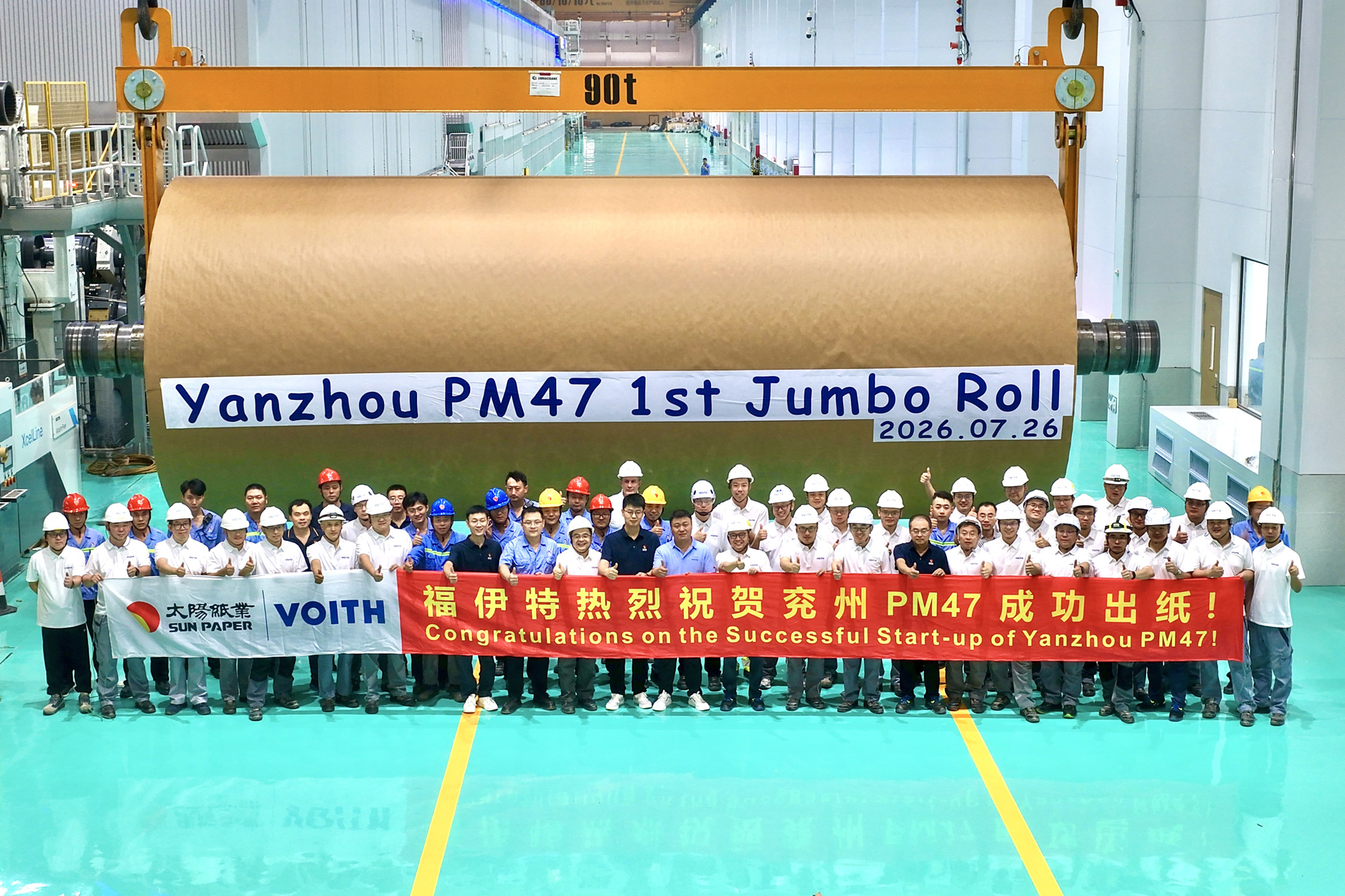
Using vertical integration to hedge against raw-material cycles is a well-established strategy in the paper industry. Companies such as Nine Dragons Paper and Sun Paper have followed similar paths, although relatively few household tissue manufacturers have invested in integrated pulp-and-paper production bases.
A Transformation in Corporate Governance
The company's transformation is also taking place at the governance level.
In January this year, C&S Paper completed a noteworthy management reshuffle. Chairman Liu Peng stepped down and was succeeded by Yang Yuzhao, a veteran of the company who joined the group in 1996 and spent 15 years serving as chairman’s assistant.
The two sons of founder Deng Yingzhong, Deng Guanbiao and Deng Guanjie, were appointed vice chairmen. Gao Bo, who became president in December last year, is a certified public accountant and previously worked for fellow industry players Gold Hongye Paper and APP China.
C&S Paper remains in a typical period of generational transition, with its current management structure temporarily combining long-serving insiders with external professionals.
Beyond the Current Profit Cycle
The benefit from lower costs is temporary and will eventually fade. Product-mix upgrades and the bamboo-pulp production base, by contrast, are assets that C&S Paper is seeking to build for the long term.
The key question is whether this round of profit recovery represents a one-off gift from the industry cycle or marks the beginning of a structural shift.
The answer may become clear when the next pulp-price upcycle arrives.
As of the market close on August 24, C&S Paper’s share price stood at RMB 7.04 per share, up 0.14%, giving the company a market capitalization of approximately RMB 9 billion. The stock was down 17.34% year to date.