October 20 (local time)
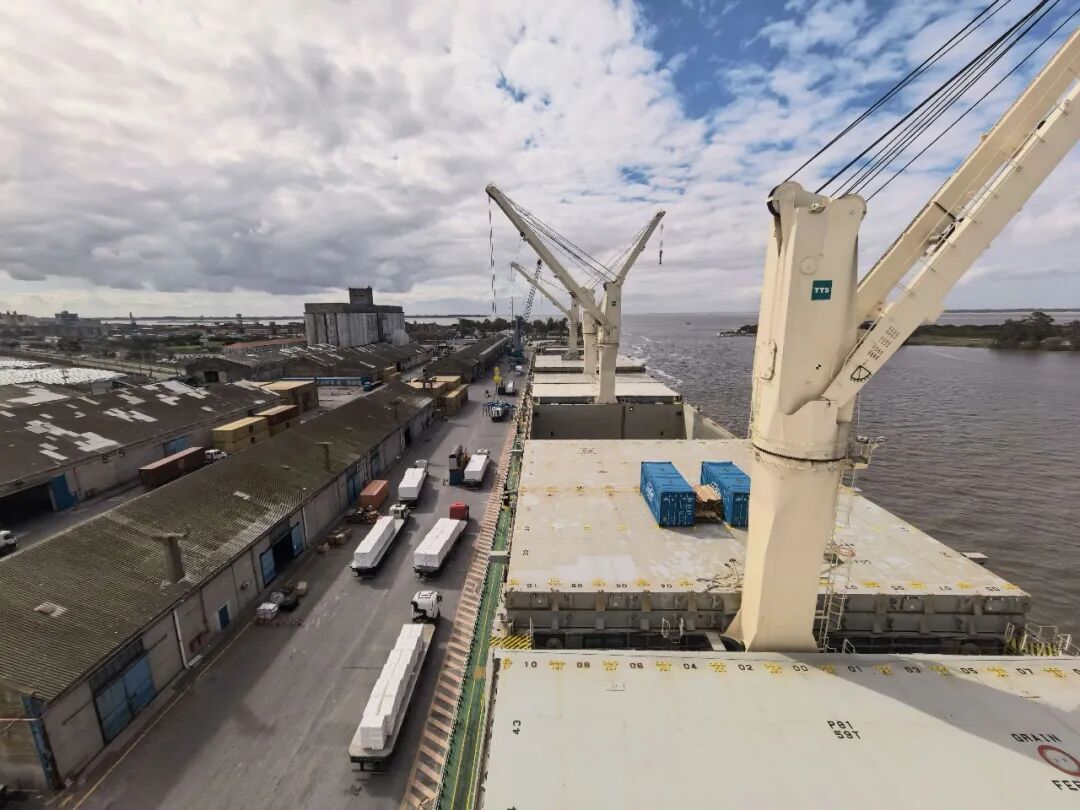
COSCO SHIPPING Specialized Carriers’ vessel GREEN SUAPE successfully completed pulp loading for Voyage V9 at the Port of Rio Grande in southern Brazil.
The operation marked the company’s first pulp loading call at the port and its first pulp transportation collaboration with Chilean group CMPC.
Previously, the company’s pulp-loading ports in Brazil were concentrated mainly along the southeast coast, including Santos and Porto Cel. This operation fills a gap in the company’s service network in southern Brazil. With a network anchored by ports along Brazil’s southeastern coast and extending to southern ports, COSCO SHIPPING Specialized Carriers’ pulp fleet will offer customers across South America a wider choice of loading ports and more flexible logistics solutions, helping them reduce inland transportation costs.
Pulp is a high-value bulk commodity that is susceptible to moisture and contamination. Its transportation requires stringent standards for cargo-hold cleanliness, operating procedures, stowage and lashing, making cargo handling and control particularly demanding.
To ensure cargo quality and operational efficiency, the company’s Pan-America Business Department joined forces with its South America team to establish a dedicated project team. The team coordinated all aspects of preparation in advance, including agent selection, joint inspections and coordination, operational planning, and emergency support, drawing on local resources to lay a solid foundation for the operation.
Several weeks before arrival, the crew began preparing the cargo holds in accordance with the operating standards established by the project team. All eight holds were thoroughly cleaned and derusted; sharp protrusions inside the holds were checked one by one; and the cleaning, dehumidification and ventilation systems were inspected to ensure that humidity levels met pulp transportation requirements.
During loading, the project team and the port agent formed a joint working group and maintained an on-site presence at the terminal throughout the operation. Dedicated lifting equipment and nylon slings were used to prevent damage to the pulp packaging. The cargo was neatly stowed in accordance with the stowage plan, with dunnage installed to prevent shifting, while deck cargo was securely lashed in line with applicable procedures.
Through close coordination among all parties, the operation was completed efficiently ahead of schedule, with zero cargo damage, zero delays and zero safety incidents. The performance earned high recognition from CMPC and the port authorities.
Founded in 1920, CMPC is a leading global pulp producer and a major player in Latin America’s forestry and paper products industries. Its businesses include pulp, wood products, tissue and packaging. With core production operations across several South American countries, CMPC is committed to sustainable forestry and supplies products to dozens of countries and regions worldwide.