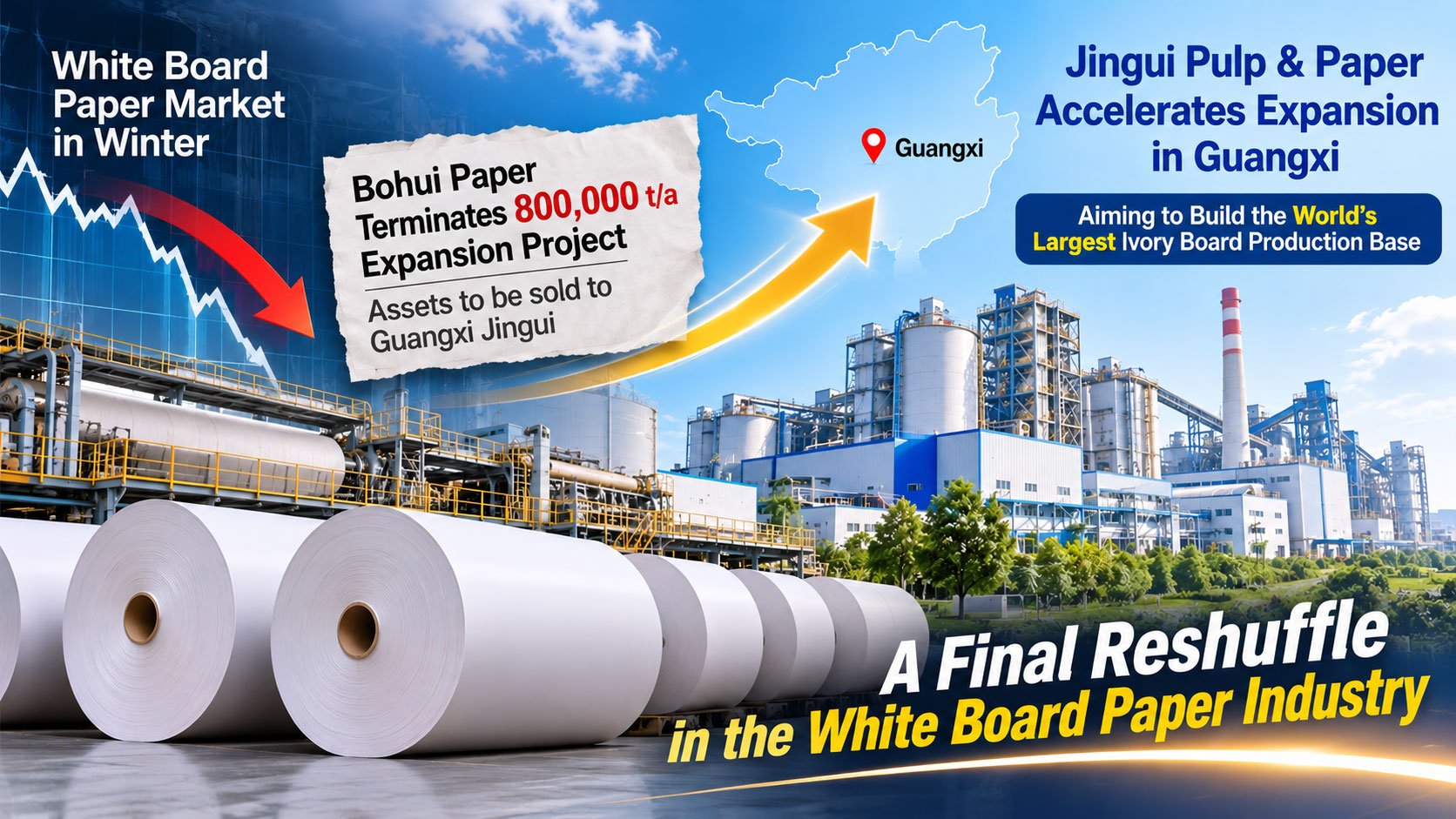
A major announcement on November 20 sent ripples through the ivory board market, which is already experiencing a downturn. Bohui Paper officially announced that it would terminate its long-planned, RMB 2.785 billion expansion project for 800,000 tonnes of high-grade specialty paperboard, bringing a four-year development plan to an end.
The company intends to sell the project's key equipment to its related party, Guangxi Jingui Pulp & Paper, for RMB 702 million.
Against a backdrop of continually falling ivory board prices and severe industry-wide overcapacity, this related-party transaction—combined with progress on Jingui Pulp & Paper's major Phase III project—is accelerating APP's Qinzhou base in Guangxi toward its ambition of becoming the world’s largest ivory board production base.
Without Pulp-Paper Integration, Jiangsu Bohui Abandons the Project
The two core production lines in Bohui Paper's 800,000-tonne specialty paperboard project were originally second-hand paper machines from APP's Ningbo Zhonghua Paper. After Ningbo Zhonghua Paper was completely shut down, the project was approved by Bohui Paper's shareholders in 2022 and was subsequently planned for implementation at Jiangsu Bohui Paper.
Jiangsu Bohui Paper already operates two large-scale ivory board production lines, each with a capacity of around one million tonnes, giving the site total annual capacity of more than 2.4 million tonnes. However, the scale of these machines also limits production flexibility. They are most efficient when running high-volume, lower-value commodity board. At the time, adding two medium-sized machines, each with an annual capacity of 400,000 tonnes, was expected to help optimize the company's product mix and increase the proportion of high-grade board.
Four years of market changes, however, have transformed the industry landscape. Bohui Paper stated in its announcement that the paper industry has entered a period of profound structural adjustment, with major changes in supply and demand, raw-material costs and product mix since the project was approved. Continuing with the project could increase operating risks, the company said, and it therefore decided to terminate the project and dispose of the equipment already under construction.
The company's announcement gives the official rationale. However, the key issue is the absence of in-house chemical pulp production. Unlike Nine Dragons Paper, Sun Paper, Liansheng and Jingui within the same group, Jiangsu Bohui does not have its own chemical pulp capacity or a recovery boiler to supply energy. It must rely on market-purchased pulp, leaving its production cost several hundred yuan higher per tonne of paper. Although its location is closer to downstream consumer markets, the resulting logistics savings are far from sufficient to offset this production-cost disadvantage.
Jingui Pulp & Paper's Strategic Positioning and Commitment
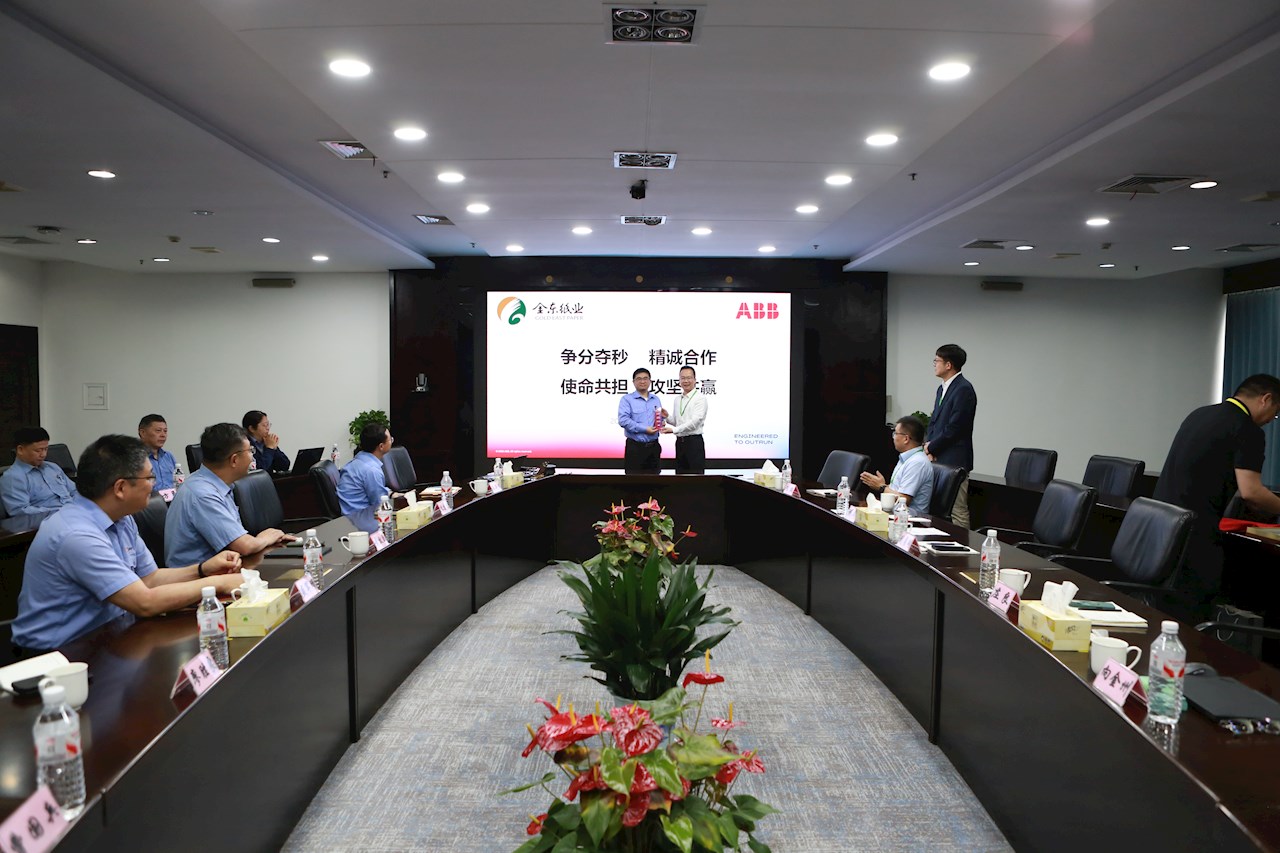
The buyer, Guangxi Jingui Pulp & Paper, is a key pulp-and-paper platform under Gold East Paper, the indirect controlling shareholder of Bohui Paper. The two large paper machines originally intended for the Jiangsu site will now be relocated south to Qinzhou, Guangxi, where they are expected to complement Jingui Pulp & Paper's Phase III integrated forestry-pulp-paper project, which is currently under intensive development and is designed for 3 million tonnes of capacity.
Jingui Pulp & Paper's two existing ivory board production lines have undergone continuous optimization and upgrades, and their actual output has already exceeded their original designed capacity. In addition to the two lines transferred from Jiangsu Bohui Paper, the group's new Qinzhou project has also secured agreements for two large imported ivory board production lines, together with supporting large-scale chemical pulp and chemi-mechanical pulp projects.
The plan is to integrate pulping, papermaking, chemicals, energy and environmental protection facilities into a highly self-sufficient forestry-pulp-paper industrial park. Once all projects reach full production, Jingui Pulp & Paper, including Jinzhou Pulp & Paper, is expected to operate four large ivory board production lines with capacities of around one million tonnes each, two medium-sized specialty board lines with capacities of 400,000 tonnes each, and fully supporting chemical pulp and chemi-mechanical pulp facilities. This would move the group closer to its goal of building the world’s largest ivory board production base.
Qinzhou's port location also gives Jingui Pulp & Paper convenient access to imported wood chips. Combined with its large-scale in-house pulping capacity, this could substantially cushion the impact of fluctuations in external pulp prices and give the company a significant cost advantage over paper producers that focus solely on papermaking.
A Major Shake-Up Looms for the Ivory Board Industry
Behind the industry's continued capacity expansion lies a deep downturn across the ivory board sector. In recent years, new domestic ivory board capacity has continued to come on stream, while the recovery in downstream demand—from food packaging to color-box printing—has fallen short of expectations. Demand growth has failed to keep pace with supply expansion, leaving the market persistently oversupplied.
Previously, integrated pulp-and-paper producers could use their overall cost advantages to cut prices, gain market share and accelerate the exit of smaller competitors. This year, however, even integrated producers have come under pressure. Industry data show that the ivory board price index has fallen to its lowest level in recent years. Peak-season demand has repeatedly disappointed, and paper prices have already dropped below the industry's overall cost level.
Recent developments suggest that several major producers that had been locked in fierce competition are now shifting toward self-preservation. Some are converting ivory board machines to pulp-board machines to produce hardwood pulp; others are planning to switch ivory board production to kraftliner; and some have opted for temporary production shutdowns.
The decline from the previous peak in the ivory board industry has lasted nearly six years, with no clear sign of a turnaround yet. At the same time, this prolonged downturn may signal the approach of a decisive industry shake-up. Companies that rely solely on papermaking and lack their own raw-material resources have largely been pushed out. The final round of competition is likely to be concentrated among a small number of leading producers with fully integrated forestry, pulp and paper operations.
The launch of Guangxi Jingui Pulp & Paper's new projects is a key move in APP's domestic papermaking strategy and signals its determination to secure the leading position in the ivory board sector. Yet, with no clear turning point in demand in sight, the additional capacity coming into the market will introduce another significant variable into an industry already grappling with oversupply.