Counter-Cyclical Expansion Could Further Increase Market Concentration Among Leading Paper Companies
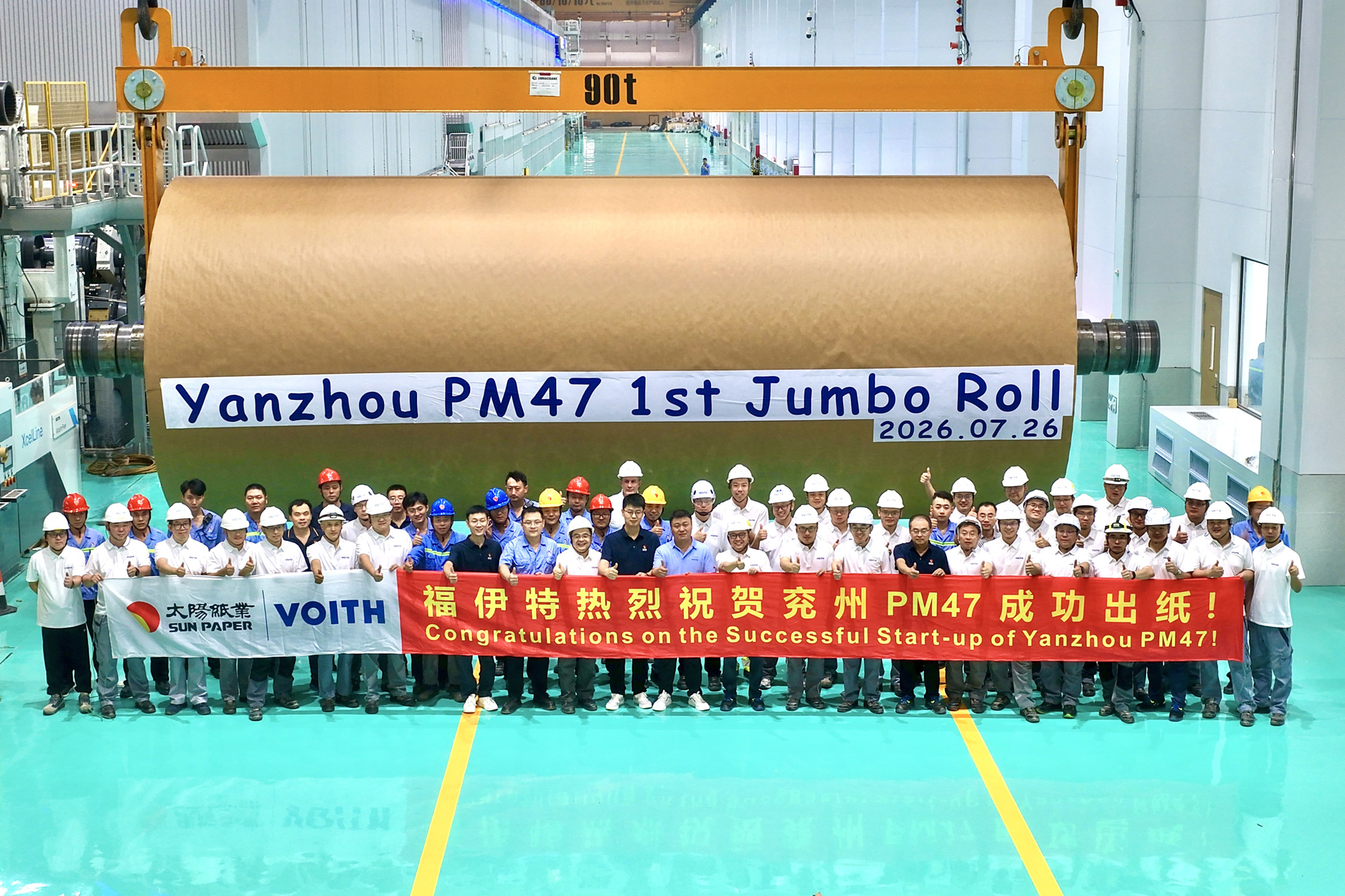
According to reports, the paper industry may still see capacity expansion in 2026. While most projects have not confirmed commissioning timelines for next year, data from Sublime China Information (SCI) suggests that, based on market feedback estimates, next year could see the release of 4.149 million tons of pulp capacity and 2.64 million tons of base paper capacity.
However, companies may postpone production depending on their own circumstances.
Why Do Paper Companies Keep Expanding Capacity—Aren’t They Afraid of Losses?
A domestic securities firm investment advisor told reporters that most paper companies in China are privately owned, and their ultimate controllers run the business to make money. Expanding production at the bottom of the industry cycle means that when smaller companies can no longer hold out and exit the market, the remaining market share will be theirs. At that point, they can raise prices and earn more. “You don’t have to look at just a period of one or two years—look at three to five years. Taken together, you’ll make more in the long run.”
A top-10 shareholder of a listed paper company told reporters that the paper industry is a case of big fish eating small fish. During a downturn, upstream capacity expansion can squeeze out companies without pulp resources. “If small firms miss the opportunity to move upstream in the industrial chain, elimination will follow. Companies with integrated forestry-pulp-paper operations that can achieve low costs and high efficiency will be able to fully dominate the market.”
The problem of oversupply in the paper industry is not unique, and it has drawn attention from both the government and the industry. Since the start of this year, policies have repeatedly addressed the issue of “anti-involution.” On July 1, the Sixth Meeting of the Central Financial and Economic Affairs Commission stressed the need to govern low-price, disorderly competition in accordance with the law and regulations, guide enterprises to improve product quality, and promote the orderly exit of outdated capacity. On July 30, the CPC Central Committee Politburo, for the first time, called for “strengthening industry self-discipline to prevent involution-style vicious competition.”
On July 28, the Guangdong Paper Industry Association issued the first-ever “anti-involution” initiative for the paper industry. The initiative called for resolutely resisting low-price, disorderly competition and safeguarding fair market order; proactively optimizing capacity structure and promoting the upgrading of technical equipment; strengthening quality leadership and innovation-driven strategies to achieve a shift toward value-based competition; and building an industry self-discipline and collaboration mechanism to foster a healthy ecosystem.
The paper industry has experienced “anti-involution” efforts before. Chang Junting told reporters that during China’s supply-side reforms in 2015, the industry eliminated 279 enterprises with outdated capacity. This optimized the competitive landscape, shifted market share toward leading companies, boosted end-consumption growth into positive territory, supported healthy industry development, and pushed up paper prices along with pulp prices.
Guotai Junan Securities and Haitong Securities pointed out that in the previous boom cycle of the paper industry, the release and implementation of the Mandatory National Standard for Energy Consumption Limits per Unit Product in Pulp and Paper Production was an important influencing factor. From 2016 to 2018, it limited both existing and new production capacity, while persistent losses among outdated capacity accelerated supply-side clearance, driving a sharp rise in paper prices and paper company profits.
Industrial Securities believes that under the “anti-involution” policy backdrop, combined with pressure on paper prices, the supply side of the paper industry will see both active contraction and passive elimination. Active contraction means that leading companies will gradually reduce investment on their own, while small and medium-sized enterprises will voluntarily exit due to lack of profitability. Passive elimination refers to the gradual phasing out of outdated capacity.
A representative from Sun Paper said that in terms of short-term prices, paper prices were at low levels in the first half of the year and may remain relatively weak in the second half. For the company, the focus is on cost management and sales to ensure profit margins. Currently, the company’s operating rate is generally stable, with normal operations except during maintenance periods, and no shutdowns have occurred.
A representative from Shanying International told reporters that the company’s industrial packaging paper is used as outer packaging for products, and demand is related to downstream end-users such as food and beverages, electronics (3C), home appliances, and other fast-moving consumer goods. If end-consumer demand improves or grows steadily, paper demand will increase and the supply-demand situation will improve.
The representative further noted that demand in the food and beverage sector is relatively stable, with a fairly fixed volume each year. However, paper prices are also affected by upstream-downstream bargaining, paper mill inventories, and raw material prices, leading to certain fluctuations within the year. The company’s product prices move in line with the market.