Wuzhou Special Paper (605007) reported on Aug. 7 that its first-half 2026 net profit attributable to shareholders rose 88.95% year on year to 230 million yuan ($32 million), as the company benefited from stronger demand and increased production capacity.
Revenue for the first half reached 4.895 billion yuan, up 18.76% year on year. Net profit attributable to shareholders excluding non-recurring items rose 96.87% to 226 million yuan.
The company said it produced 1.2042 million tonnes of paper during the period, up 17.63% year on year, while sales increased 23.13% to 1.2155 million tonnes.
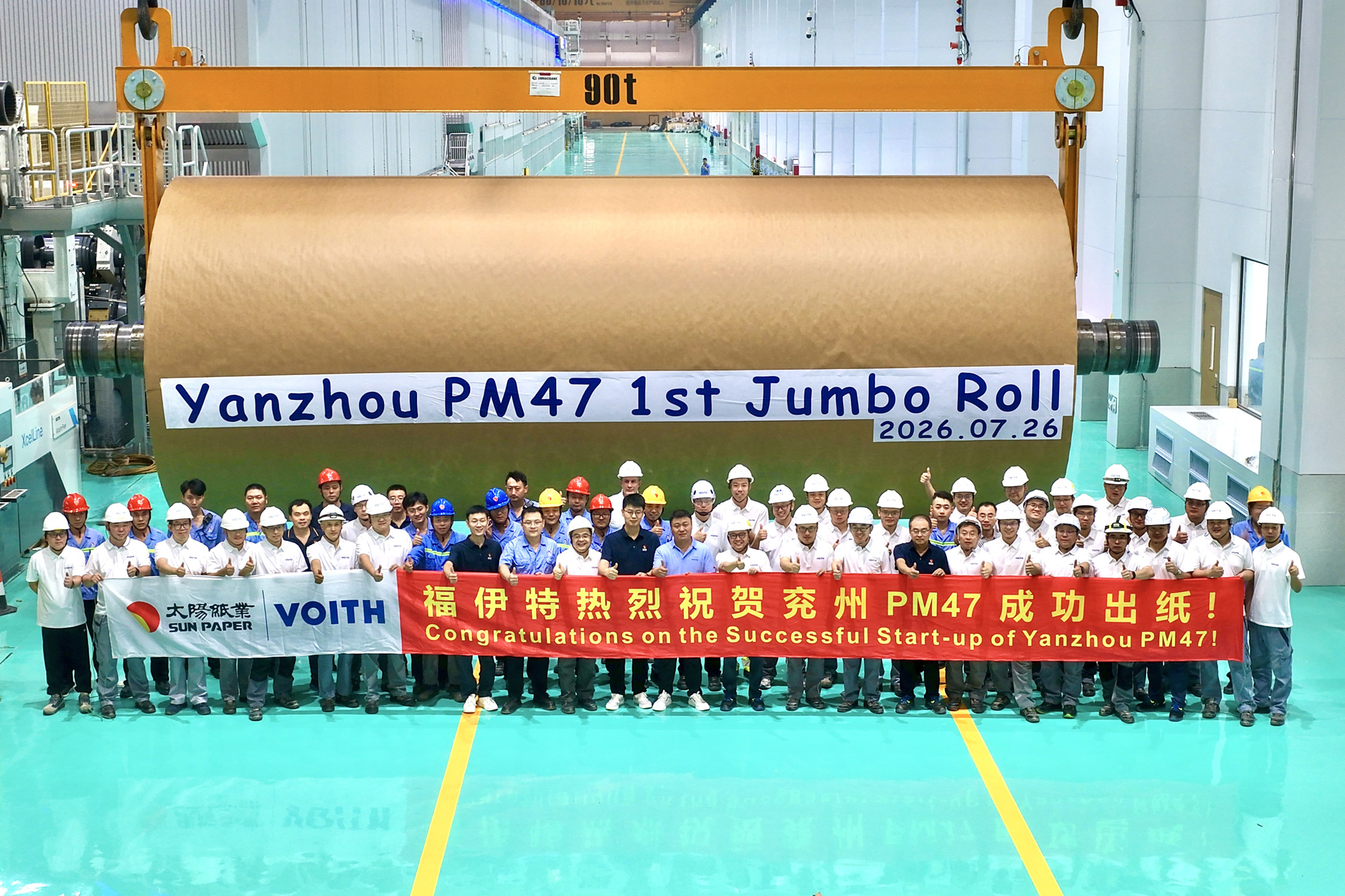
Wuzhou Special Paper said the earnings growth was mainly driven by three factors. First, industrial packaging paper production lines at its Hubei base reached full-scale operation, significantly increasing output and sales and providing a new source of revenue growth. Second, profitability improved year on year across nearly all paper grades, with only a few exceptions. Third, tighter cost controls helped mitigate market volatility and strengthen the company’s earnings base.
The Chinese paper industry showed divergent trends in the first half of 2026, with waste-paper-based packaging paper staging a V-shaped recovery, wood-pulp-based commodity paper fluctuating near the bottom and specialty paper continuing its steady growth. Containerboard and corrugated paper posted the strongest market conditions, while specialty paper benefited from resilient demand. White cardboard remained near the bottom of its cycle, cultural paper operated at thin margins or around break-even, and tissue paper remained broadly stable on steady essential demand.
Looking ahead to the second half, Wuzhou Special Paper expects limited new capacity across the industry. Seasonal demand is expected to strengthen as manufacturers stock up ahead of the Mid-Autumn Festival in the third quarter and the “Double 11” shopping promotion in the fourth quarter, supporting demand for packaging paper and food-grade specialty paper.
The company expects mainstream paper prices to remain relatively firm and industry profitability to improve further in the second half as peak-season demand strengthens and raw material costs stabilize.