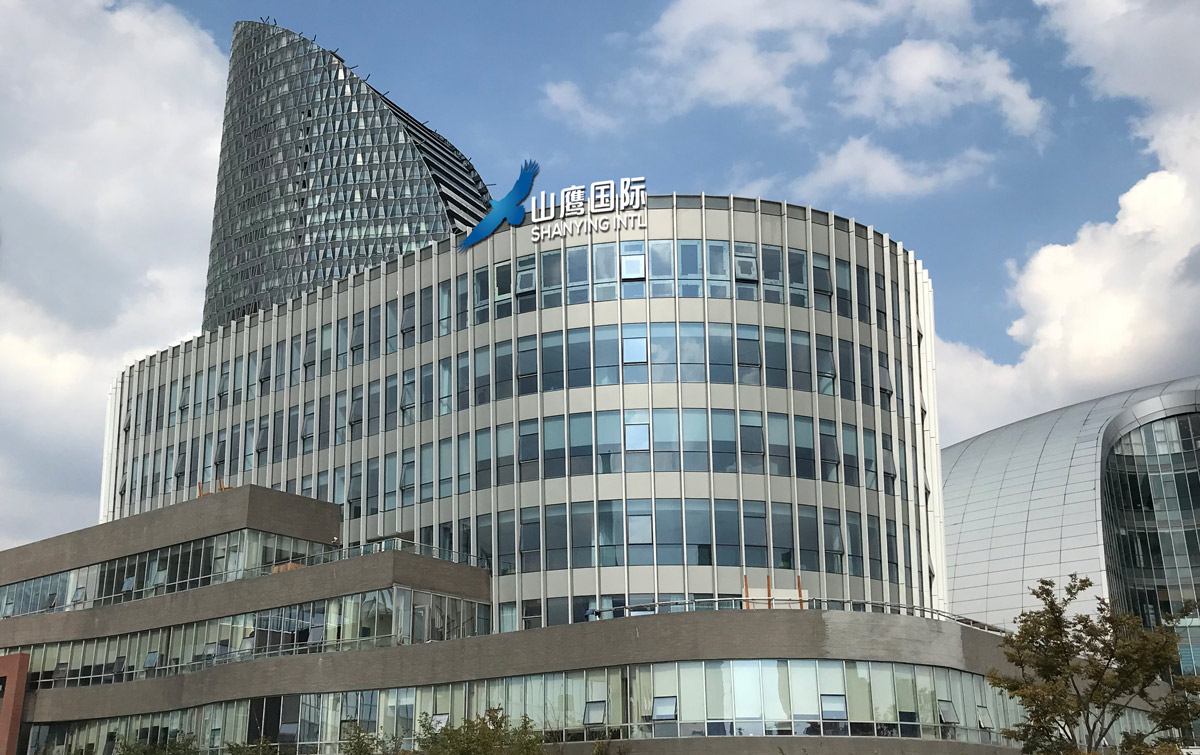
On the evening of October 30, Shanying International released its third-quarter report for 2026. For the first nine months of the year, the company recorded operating revenue of RMB 21.612 billion, up 2.26% year on year.
Net profit attributable to shareholders of the parent company was a loss of RMB 1.143 billion, while net profit attributable to shareholders of the parent company excluding non-recurring items was a loss of RMB 1.179 billion. Both losses widened year on year, indicating that the company's profitability has yet to recover.
In terms of liquidity, Shanying International generated net cash flow from operating activities of RMB 2.305 billion in the first three quarters, an increase of 8.45% year on year, reflecting sound cash-generation capacity.
Other operating indicators showed that production-to-sales ratios remained high in both the company's base paper and packaging businesses. From January to September 2026, the base paper segment produced 5.449 million tonnes, down 0.69% year on year, and sold 5.5433 million tonnes, up 1.88%, representing a production-to-sales ratio of 101.71%. The paper packaging segment recorded output of 1.501 billion square meters and sales of 1.626 billion square meters, with a production-to-sales ratio of 108.32%.
At the industry level, end-market demand was weak in the third quarter, while the supply-and-demand balance in the packaging paper market showed signs of marginal improvement.
According to data from SCI (SunSirs) Information, the price of recovered paper in China rose 14.3% quarter on quarter in the third quarter of 2026. The increase during the period exceeded the quarter-on-quarter price gains for paper grades such as linerboard and corrugating medium. The resulting narrowing of the price spread contributed to a quarter-on-quarter decline in gross margin. In addition, the growth in linerboard supply outpaced demand in the third quarter, widening the supply-demand gap compared with the second quarter. The underlying imbalance has therefore yet to be fundamentally resolved. SCI Information expects a modest recovery in packaging paper in the fourth quarter, with the market likely to be weaker initially before strengthening.
The corrugated containerboard industry in which Shanying International operates is capital-intensive, requiring substantial investment in fixed assets and construction in progress. High capital expenditure during the industry's capacity expansion peak in previous years, together with the sector's asset-heavy business model, has contributed to relatively high balances of short-term borrowings and accounts payable. In recent years, the company has made liquidity security and debt-structure optimization key operating priorities and has continued to improve its debt profile. Current liabilities due within one year declined by more than 60%, from RMB 5.766 billion at the end of 2024 to RMB 2.133 billion at the end of 2025.
Shanying International has now passed the peak period of concentrated debt repayments in an orderly manner. As of the end of September 2026, its non-current liabilities due within one year stood at RMB 2.240 billion, remaining at a relatively low level. In terms of its debt structure, the proportion of financing provided by the four major state-owned commercial banks and policy banks has continued to increase.
Regarding shareholder returns, Shanying International announced in June this year that it planned to repurchase some of its A shares through centralized competitive bidding, with a total repurchase amount of RMB 300 million to RMB 600 million. All shares repurchased are to be cancelled, thereby reducing the company's registered capital. To date, the company has repurchased a cumulative total of 4.056 million shares and paid RMB 4.9995 million, excluding transaction costs.