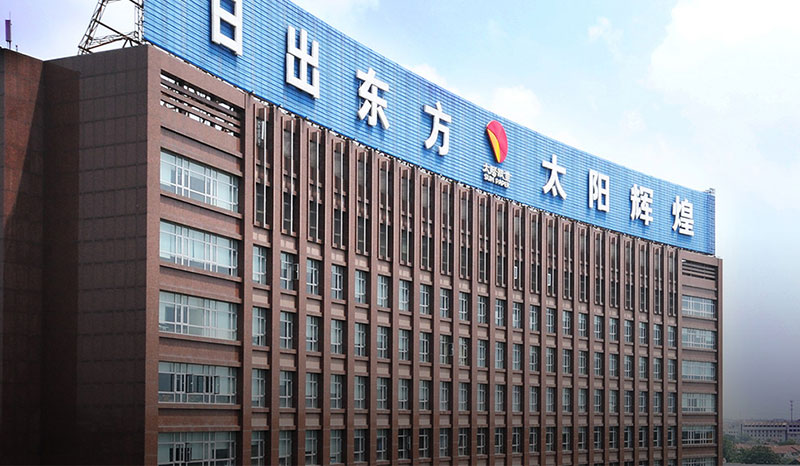
Against the backdrop of a paper industry that remains in a prolonged downturn, Sun Paper's third-quarter results have emerged as a rare bright spot amid the industry's winter.
On the evening of October 28, Sun Paper released its third-quarter report for 2026. Revenue for the first three quarters reached RMB 31.964 billion, up 10.46% year on year, while net profit attributable to shareholders of the parent company totaled RMB 2.922 billion, an increase of 16.88%.
Asked about the reasons for the earnings growth, a representative of the company's Securities Department said: “The company has continued to bring new production capacity online, which is one of the factors affecting operating performance. At the same time, we benefit from economies of scale and have consistently adhered to our integrated forestry-pulp-and-paper strategy. Overall operating performance last year was satisfactory, with good results in both cost control and sales. These factors, taken together, have supported the company's profitability.”
Alongside its results, the company also announced another round of capacity expansion. Sun Paper plans to invest in two projects at the Yandian plant in its Shandong base: a 500,000-tonne-per-year natural biomass fiber (chemical wood pulp) project, together with supporting facilities such as alkali recovery, with an estimated total investment of RMB 2.5 billion; and a 600,000-tonne-per-year green paper-based packaging materials project, with an estimated investment of RMB 1.5 billion. The two projects represent a combined investment of RMB 4 billion and each has a construction period of 18 months. Both are subject to approval by the company's shareholders' meeting.
Two More Projects Added to the Shandong Base
A representative of Sun Paper's Securities Department said that, in the packaging paper segment, the company believes the overall economy will gradually improve. As living standards continue to rise, the market for mid- to high-end packaging paper is expected to expand, making this one of the company’s development priorities.
Founded in 2000, Sun Paper is a multinational integrated forestry, pulp and paper group headquartered in Jining, Shandong Province. It operates pulp and paper production lines. Its packaging paper business, one of its core businesses, currently includes kraft linerboard, high-strength corrugating medium and food-grade environmentally friendly packaging paper. By the end of 2025, the company’s total packaging paper capacity had reached 4.4 million tonnes, with mid- to high-end products accounting for more than 80%.
According to the company's announcement, the 600,000-tonne-per-year green paper-based packaging materials project will use recycled fiber and market pulp as its main raw materials to produce paper-based packaging materials. The 500,000-tonne-per-year natural biomass fiber project, together with supporting facilities such as alkali recovery, will use market-purchased wood chips and other raw materials to produce natural biomass fiber (chemical wood pulp).
The two projects are not isolated capacity additions; rather, they address two strategic priorities for Sun Paper: its product portfolio and its cost structure. The first will further increase the Shandong base's production capacity in packaging paper and improve the grade and quality of its packaging paper products. The second will expand the base's in-house pulp production capacity, effectively reduce its reliance on externally purchased wood pulp, and help improve the grade and quality of related paper products. It will therefore strengthen the Shandong base's cost-control capabilities and the market competitiveness of its products.
Sun Paper has laid out a relatively clear investment schedule. Subject to approval by the shareholders' meeting and the relevant government authorities, both projects are scheduled to commence in 2026. The company plans to complete 20% of the total investment by the end of 2026 and the entire investment by the fourth quarter of 2027, when the new production lines are expected to enter trial operation.
Sun Paper said that implementing the 600,000-tonne green paper-based packaging project at the Yandian plant is consistent with its medium- and long-term development strategy. It is an important step toward achieving efficient coordination among the company’s three bases in Shandong, Guangxi and Laos, further advancing the development of an optimized, fully integrated forestry-pulp-and-paper value chain, continuously strengthening its core competitiveness, and ensuring high-quality, sustainable development.
According to Sun Paper's third-quarter report, production capacity at its Shandong base is taking shape rapidly. The second phase of the 140,000-tonne specialty paper project at the Yandian plant came on stream in January this year; the 700,000-tonne-per-year high-grade packaging paper project started production in August; and the 600,000-tonne-per-year bleached chemical pulp project, together with supporting alkali-recovery facilities, started production in September. Combined with the newly announced 500,000-tonne natural biomass fiber project and 600,000-tonne green paper-based packaging project, these developments will further strengthen the Shandong base’s in-house pulp supply capacity and make its packaging paper and specialty paper product portfolio more complete.
In its 2025 annual report, Sun Paper said it remained committed to the integrated forestry-pulp-and-paper development model. It has established a global industrial footprint built around three bases in Shandong, Guangxi and Laos, which operate in close coordination and complement one another’s strengths. The company has developed an end-to-end integrated value chain spanning forest cultivation, pulping, papermaking, biomass refining and end-market sales, creating what it describes as a competitive “resilient supply chain and cost moat.”
In its commentary on Sun Paper's third-quarter report, Huatai Securities noted that, while industry demand is still awaiting recovery, the company’s cost advantages from its integrated forestry-pulp-and-paper model and its flexible production scheduling across multiple paper grades help offset fluctuations in individual paper categories and support earnings resilience. As newly added pulp and paper capacity in Shandong ramps up, higher sales volumes and the substitution of in-house pulp for purchased pulp are expected to provide further earnings growth.
Significant Divergence Across the Industry
According to Sun Paper's announcement, the company's quarterly revenue rose sequentially throughout the first three quarters of 2026: RMB 10.083 billion in the first quarter, RMB 10.779 billion in the second and RMB 11.102 billion in the third. Third-quarter revenue was therefore the highest. Net profit attributable to shareholders of the parent company was RMB 971 million in the third quarter, higher than the RMB 906 million recorded in the first quarter but lower than the RMB 1.045 billion in the second quarter.
In its third-quarter report commentary, Huatai Securities said the national average prices of linerboard and corrugating medium in the third quarter were RMB 3,780 and RMB 3,276 per tonne, respectively, up 5.9% and 15.6% year on year. However, average prices declined month by month from July to September. The average prices of uncoated woodfree paper and coated paper were RMB 4,397 and RMB 4,664 per tonne, respectively, down 9.3% and 13.3% year on year, indicating continued pressure on cultural paper prices. As for pulp, the average prices of domestically produced hardwood pulp and chemi-mechanical pulp were RMB 4,454 and RMB 2,720 per tonne, up 8.7% and 8.8% year on year, respectively. Sun Paper's gross margin in the third quarter was 15.87%, an increase of 1.80 percentage points year on year, highlighting the earnings resilience provided by its integrated forestry-pulp-and-paper model.
Guojin Securities said in a research report that Sun Paper had converted some of its cultural paper machines to produce linerboard, diversifying its product mix. By matching raw materials to production needs and increasing the share of high-end products, the company has helped keep its profitability stable.
According to Sun Paper's announcement, the second phase of the 140,000-tonne specialty paper project (PM43) at the Yandian plant in the Shandong base commenced production in January 2026; the 700,000-tonne-per-year high-grade packaging paper project (PM47) started production in August 2026; and the 600,000-tonne-per-year bleached chemical pulp project, together with supporting alkali-recovery facilities, started production in September 2026.
The China Paper Association's 2025 Annual Report on China's Paper Industry shows that national output of machine-made paper and paperboard reached 141 million tonnes in 2025, up 3.74% year on year. However, total operating revenue for the industry was RMB 1.42 trillion, down 2.59%, while total profits amounted to RMB 44.3 billion, a decline of 13.55%. The paper industry continues to face the combined effects of supply-side pressure, cost fluctuations, volatile demand, regulatory oversight and import competition. The sector remains mired in cut-throat competition, and most paper mills are struggling with a situation in which revenue rises but profits do not.
In the third quarter of 2026, profitability diverged significantly across the paper industry. Packaging paper and specialty paper performed relatively well, while ivory board and cultural paper remained under pressure.
For example, among packaging paper and specialty paper producers, Jingxing Paper (002067.SZ) recorded net profit of RMB 41.94 million in the third quarter of 2026, up 395.92% year on year. Minfeng Special Paper (600235.SH) reported net profit of RMB 11.05 million, an increase of 209.76%.
The pressure was more evident in ivory board and other segments. In the third quarter of 2026, Bohui Paper (600966.SH) recorded net profit of RMB 20.095 million, down 36.1% year on year. Yueyang Forest & Paper (600963.SH) posted a net loss of RMB 71.8218 million, compared with a net profit of RMB 17.7698 million in the same period last year, turning from profit to loss.
According to data from the National Bureau of Statistics, from January to September 2026, operating revenue in China's paper and paper products industry totaled RMB 1.05 trillion, up 4.6% year on year. Total profits reached RMB 28.01 billion, an increase of 15.3%.
Against this backdrop, packaging paper has become one of the relatively better-supported segments of the industry, although that support may prove temporary.
The corrugating medium and linerboard sectors are expected to perform slightly better in the fourth quarter than in the third. Key sources of support include holiday-related orders for occasions such as the National Day holiday and New Year's Day; domestic packaging orders driven by major e-commerce promotional campaigns; and export demand for shipping cartons as customers in Europe and the United States stock up ahead of Christmas and the New Year. Domestic and overseas demand may provide a temporary boost, lending support to paper prices. However, inventories at paper mills remain relatively high and operating rates are stable, so market supply pressure persists and may limit price increases. Overall, the corrugating medium and linerboard markets are expected to decline first and then rebound in the fourth quarter.
Looking ahead to the fourth quarter, supply and demand for softwood pulp are relatively loose, putting prices under pressure; hardwood pulp also faces considerable pressure. Downstream, prices for ivory board, cultural paper and tissue paper are all on a fluctuating downward trend. Overall sentiment across the pulp and paper value chain remains weak, and operating conditions remain challenging.